Group 1 Buick GMC South is your trusted automotive resource for outstanding vehicles and dedicated vehicle care throughout the Pearland area. Navigating heavy stop-and-go commuter traffic along the Gulf Freeway corridor during hot summer afternoons puts tremendous electrical demand on your vehicle, with high air conditioning loads and intense asphalt heat stressing the alternator and car battery alike. When battery failure catches you off guard, the factory-trained team at Group 1 Buick GMC South is here to provide practical solutions and professional auto maintenance in Houston. Review this step-by-step guide to safely jump-start your vehicle and get back on the move.
What Is the Proper Way to Jump-Start a Car?
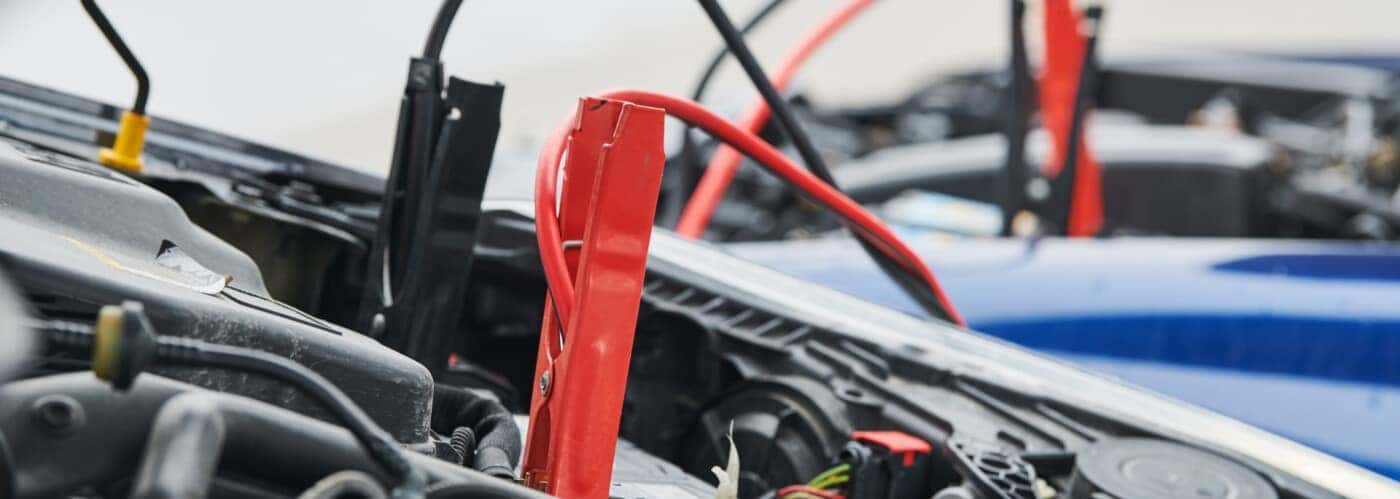
While contacting roadside assistance is always a reliable route if your vehicle fails to start, performing a jump-start yourself is manageable when you follow standard operating steps. You will need a second vehicle with a healthy, charged battery, a clean pair of jumper cables, and a safe setting away from moving traffic. If you are uncomfortable connecting cables or find yourself stranded alone in Pasadena, calling a jump-start service is the recommended choice. Otherwise, review how to jump-start your car safely:
- Face the two vehicles with the batteries facing each other. Most vehicle designs place the battery under the hood, meaning vehicles will park nose-to-nose, though some models locate the battery inside the rear hatch or trunk compartment. Turn off both engines and set both parking brakes firmly.
- Gain access to the batteries. Note: You may have to remove or unclip a plastic protective shield to reveal the battery terminals.
- Find the positive (+) and negative (-) battery terminals. Verify that both terminal posts are clean and free of corrosion, grime, or acid buildup.
- Take stock of your cables and separate the red ends from the black ends. Never let the clamps contact one another, as direct metal-to-metal contact can spark. Attach one red clamp to the positive (+) post of the drained battery.
- Uncoil the cables and hook the second red clamp to the positive (+) terminal of the operational booster battery.
- Connect the black clamp to the negative (-) post on the good booster battery.
- Connect the final black clamp to a clean, unpainted metal surface on the dead car’s chassis or engine block, away from the battery.
- Once all clamps are firmly in place, start the engine of the booster vehicle. Letting the helper vehicle run for several minutes before starting the disabled vehicle allows the weak battery to receive an initial surface charge.
- Once the disabled car cranks and begins running smoothly, carefully remove the jumper cables in the reverse order that they were installed, keeping the restarted vehicle running.
- Keep the engine running on the restarted vehicle for at least 10 minutes to prevent the battery from losing charge right away. Review your vehicle owner’s manual for specific runtime instructions, and visit a certified technician soon to test your battery’s reserve capacity.
What Are Additional Car Battery Tips and Warning Signs?
A weak battery is not the only reason a powertrain might refuse to turn over. When a jump-start fails to revive your engine, several other mechanical and electrical components may be responsible. To pinpoint the exact cause, you can easily schedule certified GM service with our factory-trained maintenance department. Keep these helpful tips in mind:
- If you try to start the car and hear only a clicking sound from the engine bay, the starter motor or its solenoid could be worn out rather than the battery.
- If the electrical features, cabin lighting, and infotainment screens illuminate but the starter does not engage, the issue may involve the ignition system, neutral safety switch, or a blown fuse. Bringing your vehicle to an authorized service facility near League City ensures quick, pinpoint diagnostic evaluation.
- Ensure you drive or idle the vehicle for at least 15 to 20 minutes following a jump to permit the alternator to replenish the drained battery cells. If your vehicle remains parked for long stretches without use, using a battery trickle charger can preserve voltage levels. However, if your battery is more than three or four years old, frequent jumps indicate that the unit has reached the end of its lifespan and needs replacement.
Count on Group 1 Buick GMC South whenever you need trustworthy maintenance advice, routine oil care, or professional battery replacements. If recurring electrical issues have you considering an automotive upgrade, explore our impressive selection of latest new Buick GMC inventory or browse our certified selection of inspected pre-owned vehicles today.
Disclaimer:
Offers, pricing, and promotional terms subject to credit approval and OEM guidelines; excludes state taxes, registration fees, and dealer-installed options. EPA/OEM mileage, EV range, fast-charging, and towing specs provided for comparison purposes only; actual results vary based on driving habits, vehicle maintenance, battery condition, external temperature, and load weight. Driver-assist safety features are not a substitute for attentive driving; see owner’s manual for operating limits. Diagnostic codes and maintenance guides provide general estimates; visit the certified service department at Group 1 Buick GMC South for full diagnostic evaluations.